These do not only sound like a set of strong and important qualities; they truly are. At the same time, we find that this is not always self-evident in organizations that are increasingly faced with change. Why is that? Are we perhaps expecting too much from flexibility as a trait? What if we assume that dealing with change is a skill, rather than a talent that you either possess or do not? Does that not provide much more breathing room and oxygen? Take a deep breath and read along to learn how organizations handle change today, and be inspired!
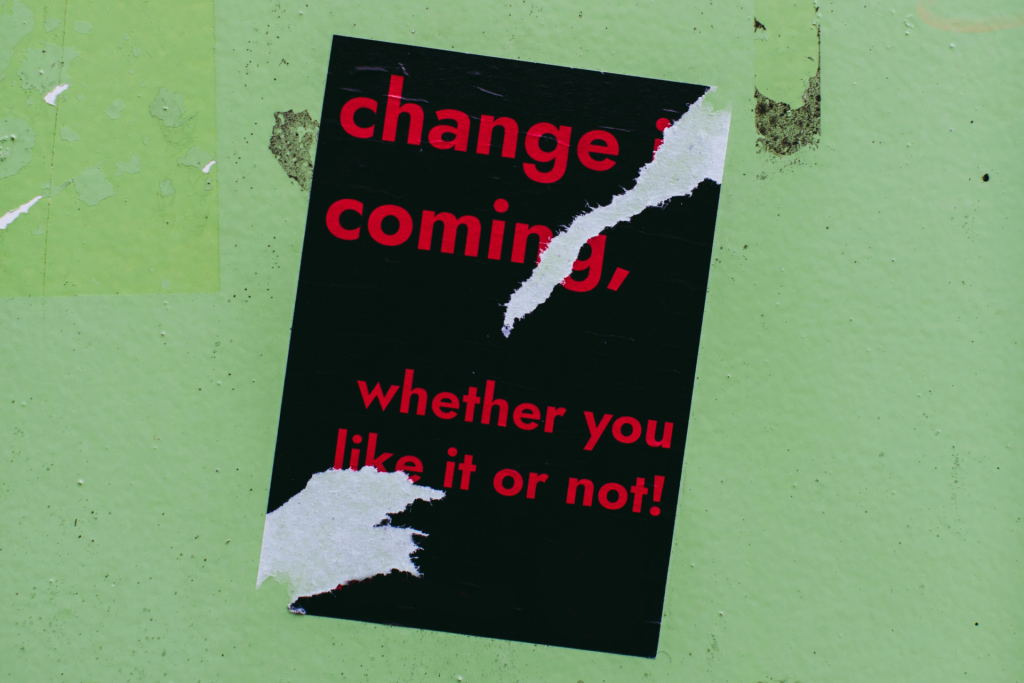
In the past, things changed with steady regularity: during a transition of power, in crisis situations, or due to new digital developments. Today, that reality seems reversed. Change is the daily reality, interspersed with shorter periods of relative calm and stability. Naturally, societal evolutions, technological leaps, and innovation play an important role in this, but opportunities for growth and process improvement also constantly act as a catalyst for change. There is nothing wrong with that, as long as everyone is on board and feels motivated to jump on the next train. This is precisely where many organizations today seek support and a compass.
Change is never neutral
Organizations today are challenged to be forward-thinking and to proactively respond to what both the organization and its employees need to deal with change in a caring and effective manner. Strategic choices and implementation are usually at the top of the priority list. However, change processes require more than a strategic vision and the alteration of structures and processes. Empathy and attention to people’s well-being are also indispensable for making change processes successful. After all, change is never a neutral process: it is accompanied by emotion, expectations, and often resistance.
Change inevitably brings uncertainty and tension. How people deal with this varies greatly: some see opportunities for personal growth and development, while others find it difficult to let go of the stability of the familiar. Recognizing these differences and allowing space for them is a first step. Keeping a finger on the pulse, daring to slow down at appropriate times to truly listen to what is going on, and clear communication will take you a long way.
In the past, a well-delivered story about why we want change seemed sufficient to convince people. Today, employees also want a voice in the narrative, and a completely different approach is required. Too much ‘coddling’? Not at all. When change becomes a constant, it is logical that a different kind of support is needed. Communicating with people about how they experience the change processes, rather than just about the content, can provide a core guiding principle. Providing transparent information, listening with empathy, frequently checking in on how things are going and where the needs lie, guides an organization and its employees step-by-step through a sustainable change process in which as few people as possible are left behind.
The value of the small story
The ‘big story’ about the benefits of change for the organization and the future perspective associated with it must certainly not be missing. However, what is also of crucial importance are the smaller stories from the field. It is precisely within these that the keys lie to what people need to hold their own during periods of change.
It is these small stories that provide insight into how change is experienced. They offer opportunities to listen, to adjust, and to keep motivation high. Employees who feel heard, experience a sense of agency, and know that their input matters are more likely to actively contribute and voluntarily commit to the new course. A story of connection, engagement, and autonomy.
The biggest pitfall lies in ignoring or brushing aside the ‘no-voice.’ Instead, ask yourself what the resistance in your team is trying to say. Are we moving too fast, and is slowing down necessary? Is different, clearer information needed? Are employees signaling through their resistance that they do not feel competent, suggesting a need for additional training? Which other needs remain unfulfilled and are thus standing in the way of the next step?
Leadership with antennae
You can probably see it coming… Those who guide change play a crucial role in this. Leadership and change go hand in hand. And we are not just talking about CEOs or charismatic change architects who promise a rosy future. We are talking about leaders among the people. Leaders with antennae who, in addition to figures and performance, primarily have an eye and a heart for their employees. Leaders who are willing to truly listen.
More than ever, with Walk Your Talk, we support managers in developing coaching skills, empathy, and a mindset that allows them to support and facilitate change. They convey the big story and provide direction, while simultaneously knowing how to keep it manageable and realistic for employees. These are the new leaders of today. They underpin change through a culture of trust in which people feel safe to share their ideas, concerns, and needs. Human connection as the foundation for a resilient organization.
Change and leadership development are therefore inextricably linked. To facilitate change trajectories, managers are needed with the right mindset and skills to, on the one hand, fully indicate the direction, keep an eye on the benchmark, and communicate clearly. On the other hand, you want to see this balanced with empathy, care, and attention for employees. Leaders who do not push change through at all costs based on their own convictions, but who know how to involve and coach employees and teams from a place of trust and an ‘all together’ mindset.
In our work, connecting communication is the common thread that supports this process in a caring and efficient way. A culture of connection helps people engage in dialogue with one another from a place of empathy and understanding, even in challenging situations such as change trajectories. Making mutual needs explicit gives colleagues the opportunity to connect with what is important to others. In this way, different viewpoints can coexist and no longer need to be fought over. The result? Less tension, resistance that becomes discussable, and creative solutions that emerge from the teams themselves. Employees feel heard, and leaders gain more insight into what is happening within their teams. This increases not only trust but also people’s willingness to actively contribute to the change process. In this way, the change process actually strengthens a culture of collaboration, respect, and openness.
In short, change is inevitable; how we deal with it is a choice. Finding the right balance between strategic planning and execution on the one hand, and caring and empathetic leadership on the other, teaches people to deal with this challenge in a sustainable way!